
The forever-home standard
Aging-in-place design, on every plan we draw.
Three-foot doors. Four-foot hallways. Blocking in the walls for grab bars. Not an upgrade, not a package, just how we draw a house.
Everybody eventually needs a walker or a wheelchair, if only for six weeks after a surgery or a bad fall. Framing for that while the walls are open costs close to nothing. Retrofitting it later costs a fortune, and sometimes it isn't possible at all, which is how people end up leaving houses they had no intention of leaving.
Where this came from
We spent years building condominiums and retirement homes. Low-maintenance houses for people who had deliberately chosen not to move again. That work leaves a habit behind. When you have watched enough people age inside houses you built, you stop drawing thirty-inch doors.
That thinking has been in every plan since.
What goes into a forever home
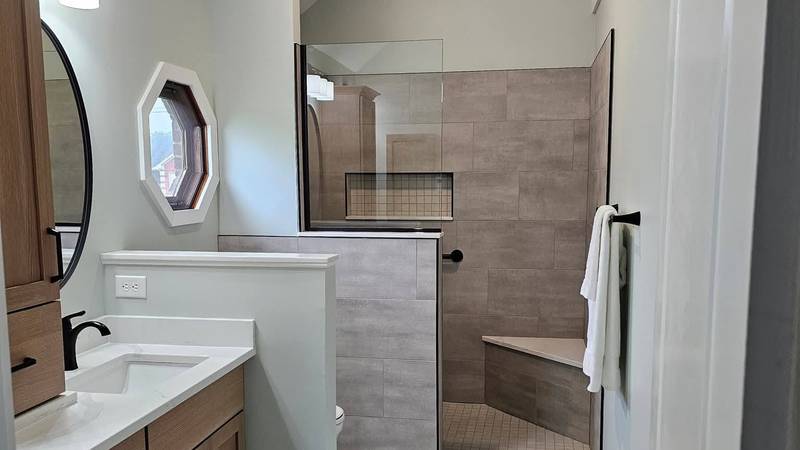
- Three-foot doors throughout. A 36-inch door passes a wheelchair. A 30-inch door does not, and it's the most common reason a house stops working for its owner.
- Four-foot hallways. Wide enough to turn a walker, and wide enough for two people when one of them is helping the other.
- Zero-step entry wherever the grade allows, usually achievable with thoughtful site work and a garage that's set at the right elevation.
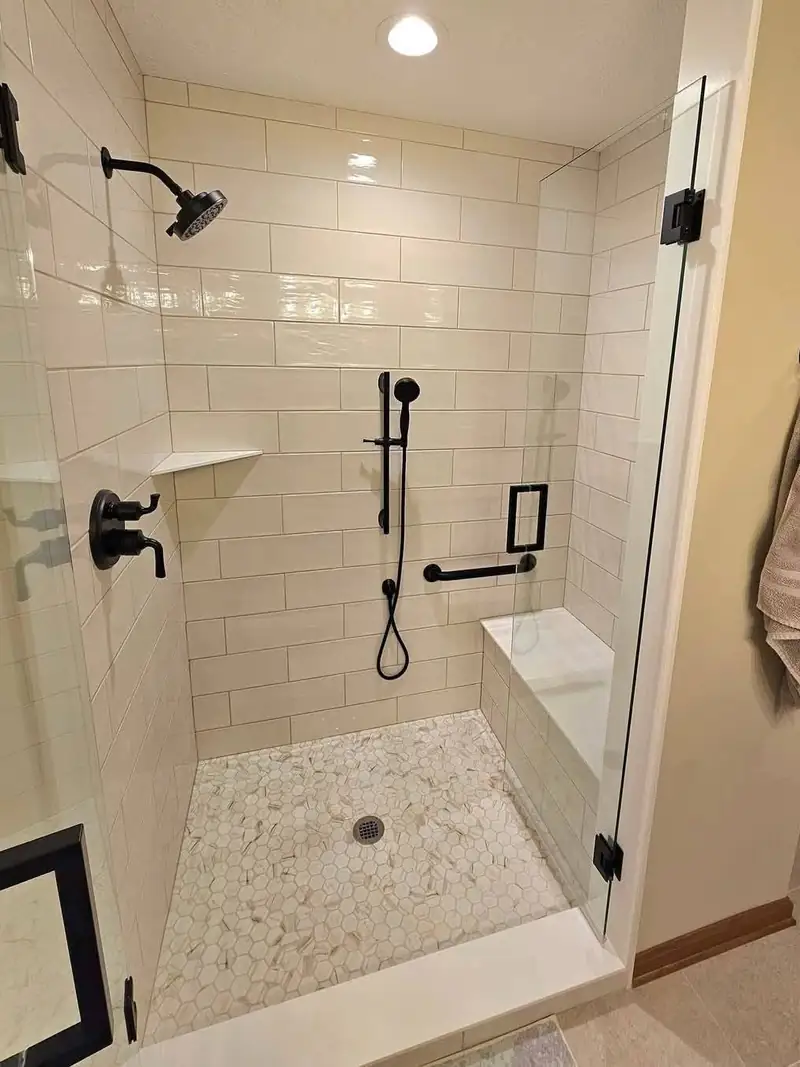
- Curbless or low-threshold showers, with a bench and a handheld sprayer on a slide bar. How a zero-entry shower gets built.
- Blocking in the walls at grab-bar height in every bathroom, whether or not a bar goes on today.
- Main-floor living: primary bedroom, full bath and laundry all on the entry level, so the stairs become optional.
- Lever handles, rocker switches, and lighting planned for eyes that are twenty years older than they are now.
- Low-maintenance exteriors, because getting on a ladder is the other thing that stops being a good idea.
It doesn't have to look like anything
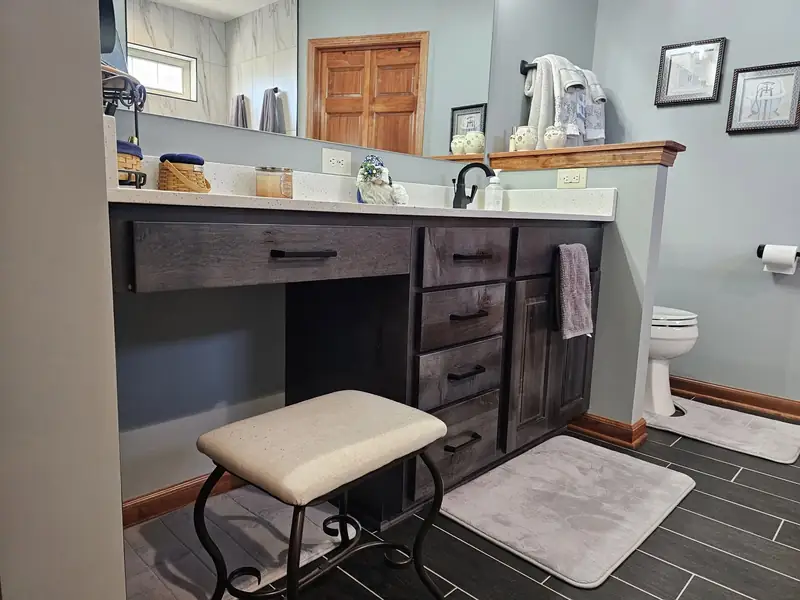
This is the objection we hear most, and it's fair. Nobody wants their house to announce a future they'd rather not think about. But a wide door just reads as generous. A curbless shower reads as expensive. A grab bar in a good finish reads as a towel rail. Blocking in a wall is invisible by definition.
Done at design time, accessibility and good design are the same decisions. It's only when it's bolted on afterward that it starts to look like a hospital.
Worth knowing
The cheapest time to do this is now.
At design
Wide doors and halls cost essentially nothing. It's the same lumber, arranged differently.
During a remodel
Blocking, a curbless pan and a relocated drain are cheap while the floor and walls are already open.
After the fact
Widening a finished doorway means framing, drywall, trim, flooring and paint, and sometimes it's structurally off the table.
Aging-in-place questions
What families ask us.
On a new build, the core of it (wide doors, wide halls, grab-bar blocking) is standard here and isn't a line item. Wider doors need marginally more material and that's about the extent of it.
The pieces that do carry real cost are a curbless shower built properly, a zero-step entry on a site that fights you, and putting everything you need on one level. Those get priced like any other scope during pre-construction.
Often yes, and the honest answer depends on the house. Bathrooms are usually the highest-value change and the most achievable. A curbless shower, a wider door, and proper blocking transform whether somebody can stay.
Zero-step entry depends on your grade and garage elevation. Widening interior doors depends on what's in the walls. We'll walk the house and tell you which changes are worth the money and which aren't.
Then look at an ADU or an attached in-law suite. It's a large share of the accessible work we do, and it lets someone stay near family without either household giving up its own front door.
Whether a second dwelling is permitted comes down to your parcel and your county, and that's the first thing we check.
Start a project
Who are you building this for?
Yourselves in twenty years, or a parent next spring. Both are good reasons. We reply within three hours on a weekday.